
As we observe the natural world in autumn, we are reminded that change and release are an inherent part of life.
The trees shed their leaves, perennial plants draw their resources inward, and the landscape slowly prepares for a time of rest. There is beauty in the ever-changing nature of life, in honoring the richness of what has been while trusting that each season brings its own possibilities.
Yet, as humans, letting go doesn't always come so naturally. Our attachments to people, places, experiences, and even our ideas of what our lives might become can be deeply rooted. Releasing these attachments can bring waves of grief, uncertainty, fear, and sometimes even relief. Often, we find ourselves holding many of these emotions at once.
These experiences can also manifest physically. We may notice changes in our sleep, tension in our bodies, difficulty concentrating, or a sense of exhaustion from the energy we expend trying to navigate uncertainty.
One of the things I love most about working with plants is that they offer us companionship through the many seasons of our lives. In Western herbalism and Ayurveda, there are plants we traditionally turn to for calming and nourishing the nervous system, replenishing our reserves, and supporting our resilience during times of stress.
The intention isn't to take away our grief or rush ourselves toward a place of acceptance. Rather, it's to nourish and support ourselves as we move through change, allowing space for whatever emotions arise and giving ourselves grace in the process.
Here are a few herbal allies we can invite into our lives during these times.

Hawthorn (Crataegus spp.)
Keeping the Heart Open
There is something remarkable about hawthorn, a tree whose branches are lined with sharp thorns, yet produce delicate blossoms in spring and rich red berries as autumn arrives. Throughout its changing seasons, hawthorn reminds us that tenderness and resilience are not opposites, but can exist alongside one another.
Long cherished in Western herbalism as a tonic for the physical heart, hawthorn also holds a special place in traditions of tending to the emotional heart, particularly through grief, heartache, and loss.
Perhaps one of hawthorn's most meaningful lessons is that we can allow ourselves to feel the full weight of an experience without becoming hardened by it. We can honor what has been lost, carry what remains meaningful, and still leave room for life to unfold in ways we cannot yet imagine.
Ways to work with hawthorn: Enjoy a warm infusion of its dried leaves and flowers, or gently simmer the berries into a rich, slightly tart tea. Hawthorn is also lovely combined with rose and linden for a comforting tea ritual.
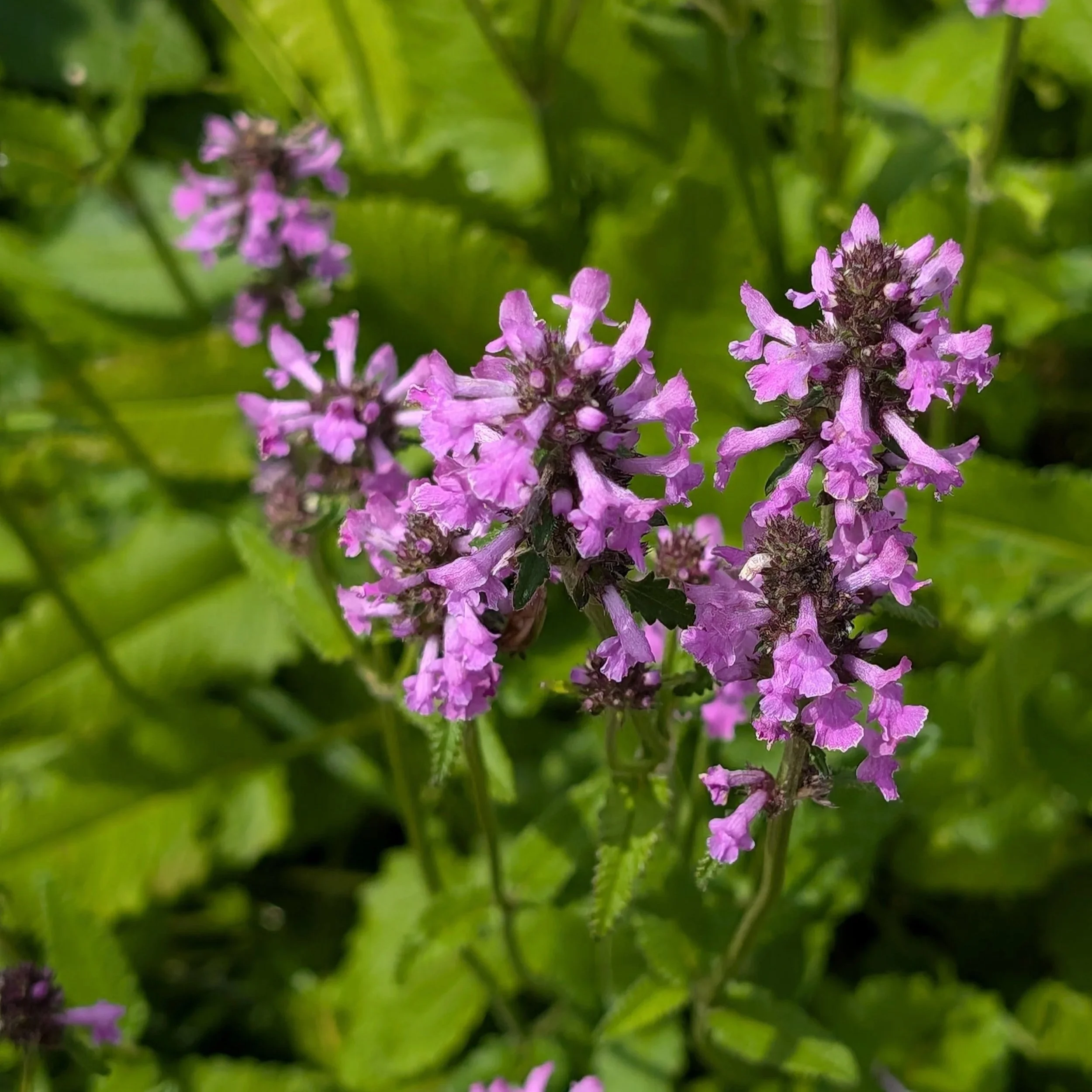
Wood Betony (Betonica officinalis)
Grounding Ourselves in the Present
A member of the mint family, wood betony has a long history of use in European herbalism. Traditionally regarded as a nervine, it is often turned to when we feel mentally overwhelmed, disconnected from our bodies, or caught up in our thoughts.
One of my herbal teachers, a clinical herbalist, once shared that he often recommended wood betony to clients navigating sobriety, as a way of supporting their connection to their bodies and helping them feel more grounded in themselves. That teaching has always stayed with me, particularly the idea that grounding isn't simply about calming the mind, but about becoming more present in our own experience.
When navigating change, it's easy to become immersed in what has already happened or what might happen next, losing our connection with what is happening right now.
Wood betony offers us an invitation to return to the body, reconnect with our senses, and ground ourselves in the present moment. We don't need to have the entire path figured out to take the next step.
Ways to work with wood betony: Prepare a warm infusion of its dried aerial parts. Enjoy alongside a grounding meditation, gentle movement, or time spent quietly in nature.
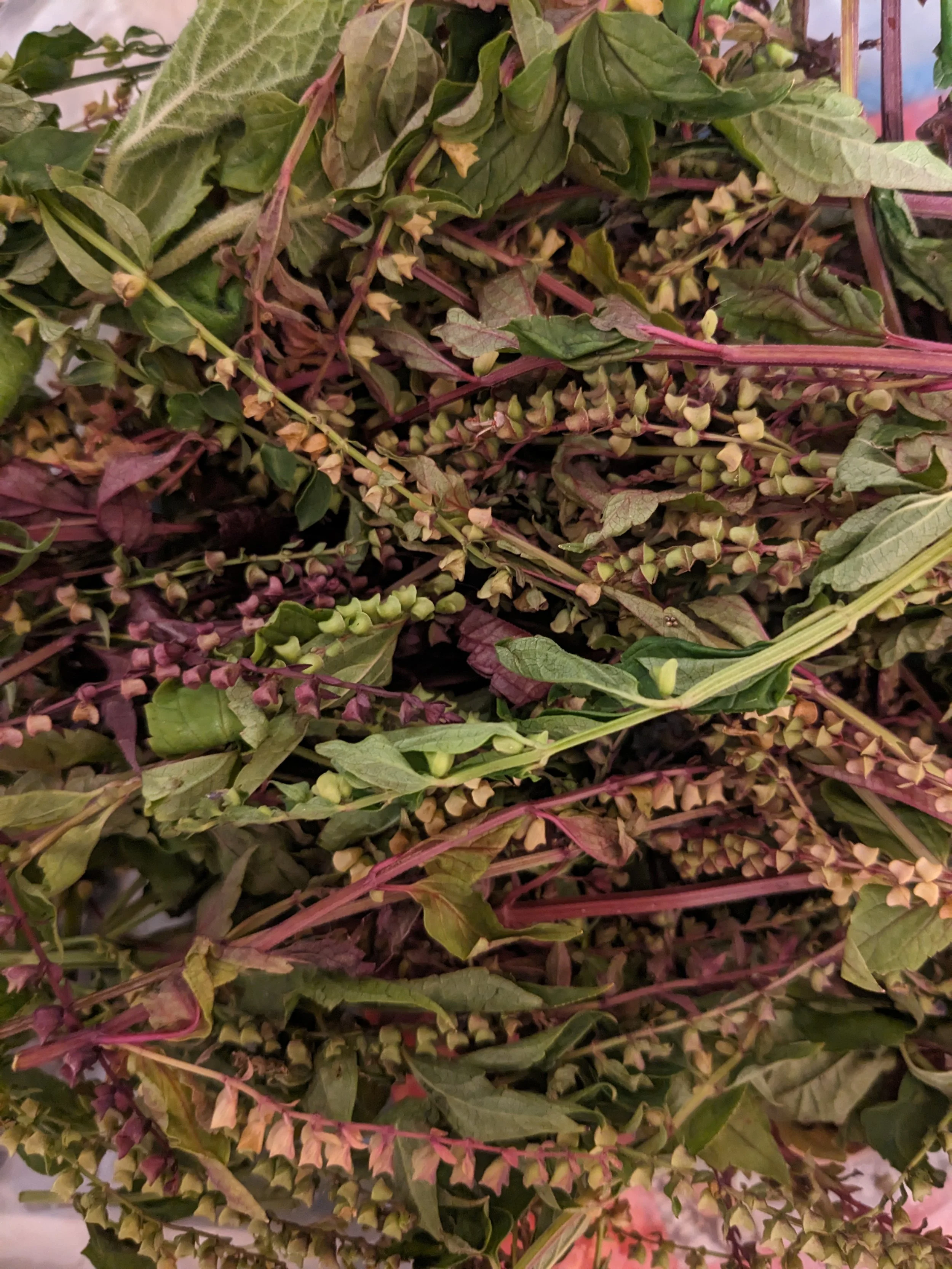
Skullcap (Scutellaria lateriflora)
Releasing What We Are Holding
American skullcap is a traditional relaxing nervine in Western herbalism, often used during periods of nervous tension, restlessness, and overstimulation.
Skullcap has become one of my favorite herbs to work with in the evening. I typically take it as a tincture to help me unwind from the day and prepare for a restful night's sleep. Unlike some other relaxing herbs, such as valerian, which I find quite sedating at times, skullcap offers me a gentler transition into rest.
Sometimes we become so accustomed to holding tension that we no longer recognize it. We carry it in our shoulders, jaw, breath, and even in our efforts to maintain a sense of control over the circumstances of our lives.
What I appreciate about skullcap is how it invites us to notice what we're holding and where we might begin to soften. Life is constantly changing, and while we cannot always control what unfolds around us, we can become more aware of how we respond. There is something freeing about recognizing that not everything needs to be resolved before we allow ourselves to rest.
Ways to work with skullcap: Enjoy a warm infusion of its dried aerial parts or incorporate a tincture into your evening ritual. Its earthy, mildly bitter flavor pairs beautifully with aromatic herbs such as lemon balm and lavender.
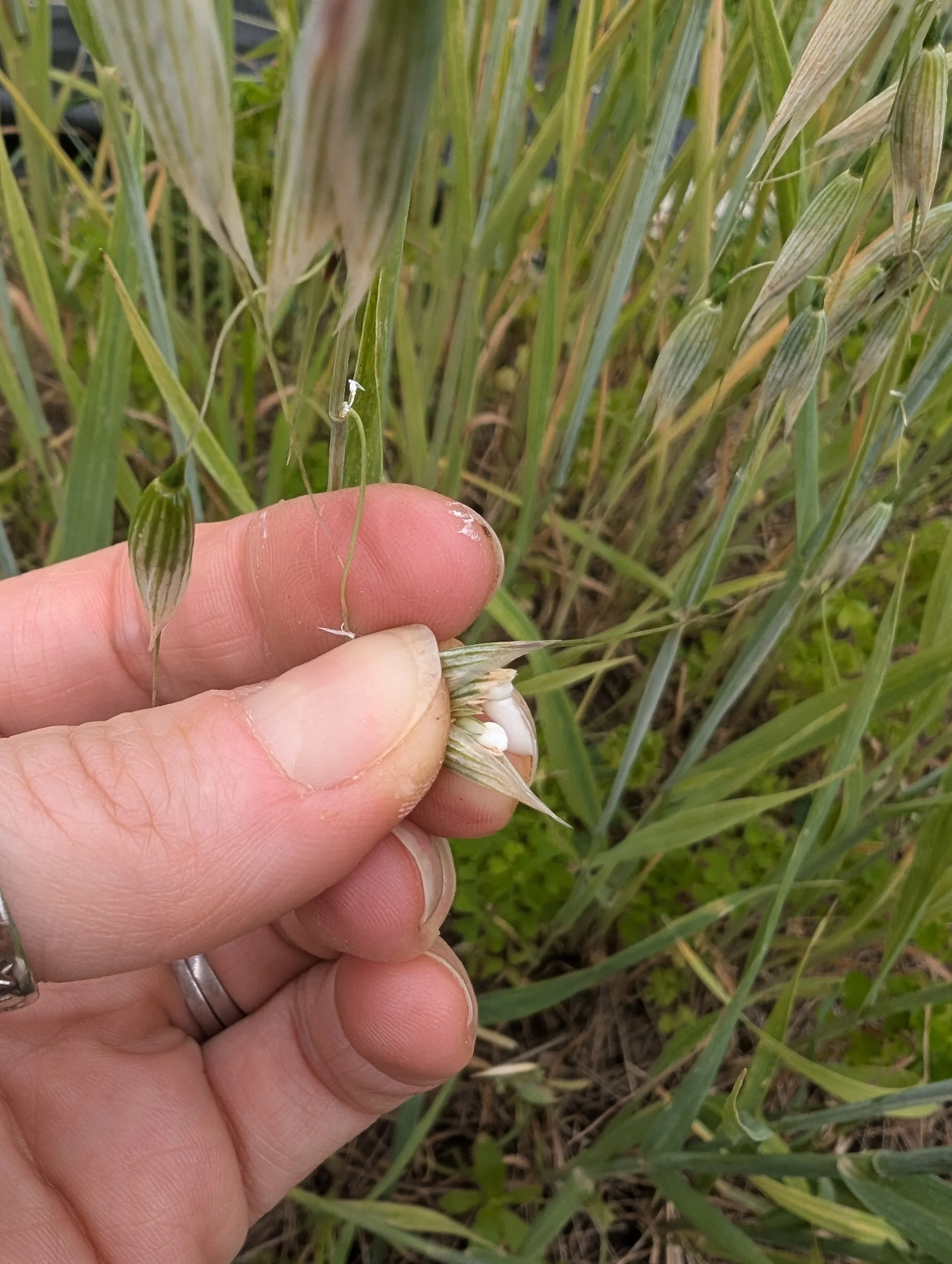
Milky Oats (Avena sativa)
Nourishment in Times of Depletion
Milky oats are the tender, immature seed heads of the oat plant, harvested during a brief window when they release a milky liquid. In Western herbalism, they are cherished as a restorative nervine, traditionally used to nourish the nervous system during periods of prolonged stress, exhaustion, and depletion.
Change can be exhausting, especially when we find ourselves carrying uncertainty, grief, or the emotional weight of difficult decisions. Sometimes we become so focused on finding our way forward that we overlook just how much we've been holding.
Milky oats offer a gentle reminder that we cannot continually draw from ourselves without replenishment. Sometimes, moving through life's challenges asks us not to muster up more strength or push ourselves further, but to slow down, tend to our exhaustion, and allow ourselves the time and nourishment we need to feel restored.
Ways to work with milky oats: Fresh milky oat tops are traditionally prepared as a tincture, while dried oatstraw can be enjoyed as a nourishing, mineral-rich infusion.
Tulsi (Ocimum tenuiflorum)
Cultivating Equanimity
Also known as holy basil, tulsi has been revered for centuries in the Ayurvedic tradition and is cherished in contemporary herbalism as an adaptogen, traditionally used to support the body's response to stress and promote vitality.
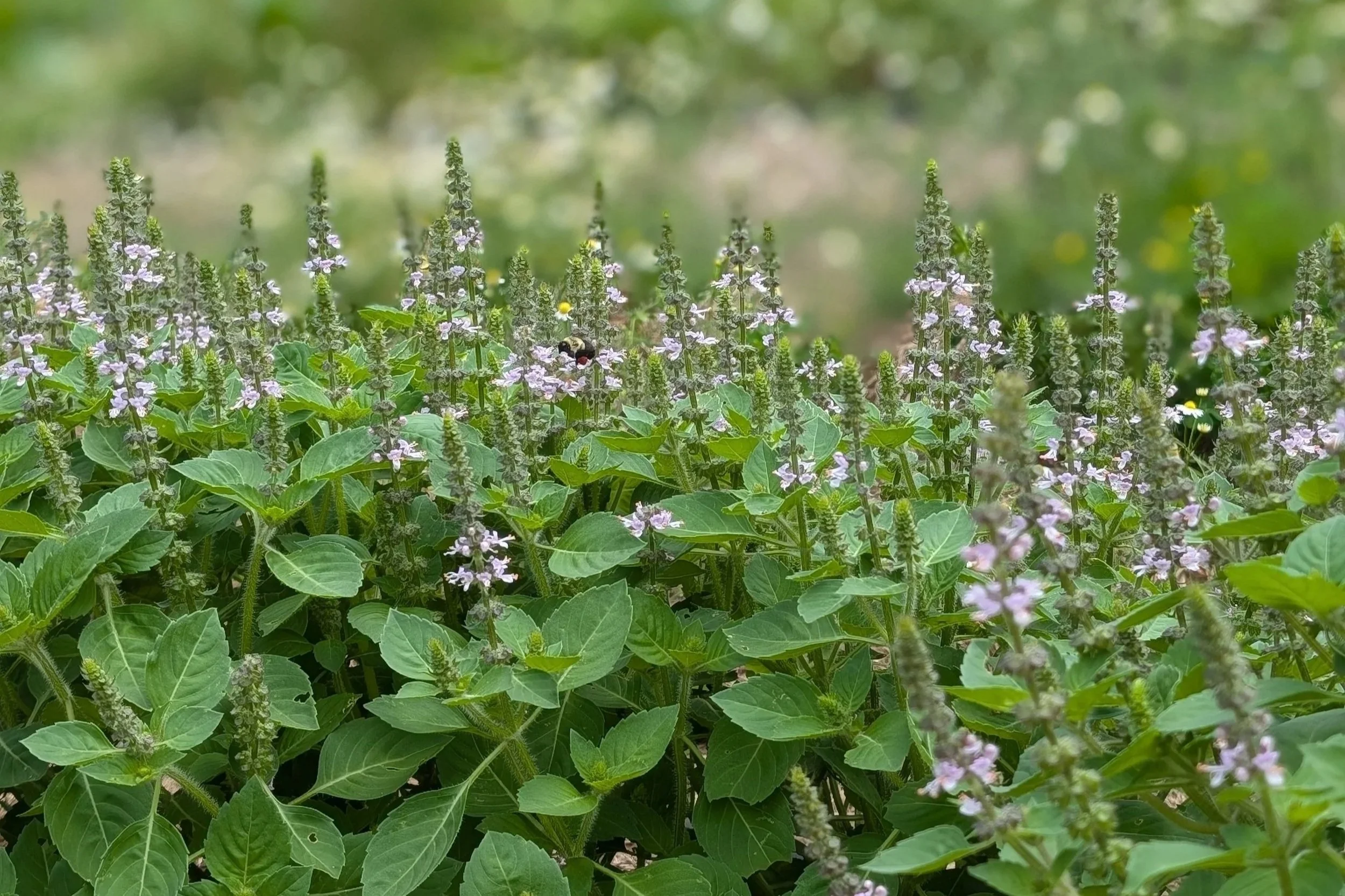
There is something truly special about tulsi. Whether I'm visiting my favorite organic farm, Sweet Autumn, or simply walking in my garden, its beautiful fragrance always reaches me before I even see the plants. Carried on the breeze, its warm, spicy, almost floral aroma is intoxicating. It immediately invites me to slow down, take a deep breath, and appreciate the beauty of the present moment.
In times of change, when our thoughts and emotions can pull us in so many directions, tulsi invites us to explore the practice of equanimity.
Equanimity isn't about turning away from our emotions, but learning to make room for the fullness of our experience. To recognize that uncertainty, sorrow, and joy are all part of being human, and that just as these feelings arise, they will also change.
Ways to work with tulsi: One of my favorite ways to connect with tulsi is simply to sit beside the living plant, breathing in its remarkable fragrance and observing the pollinators that seem endlessly drawn to its flowers. I also love preparing a simple cold-water infusion with freshly harvested leaves, allowing their delicate flavor and beautiful aromatics to slowly infuse into the water.
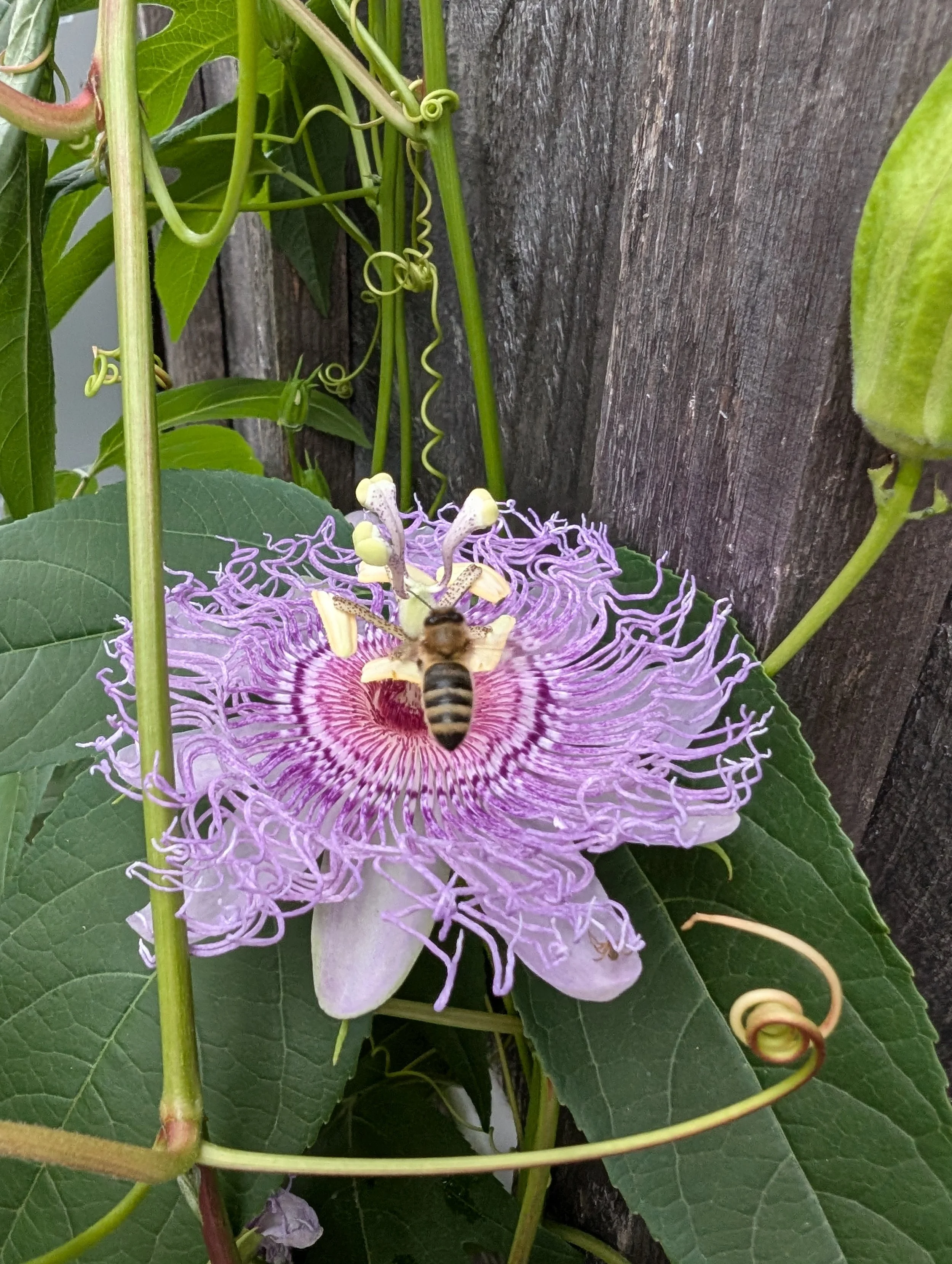
Passionflower (Passiflora incarnata)
Surrendering the Need to Have All the Answers
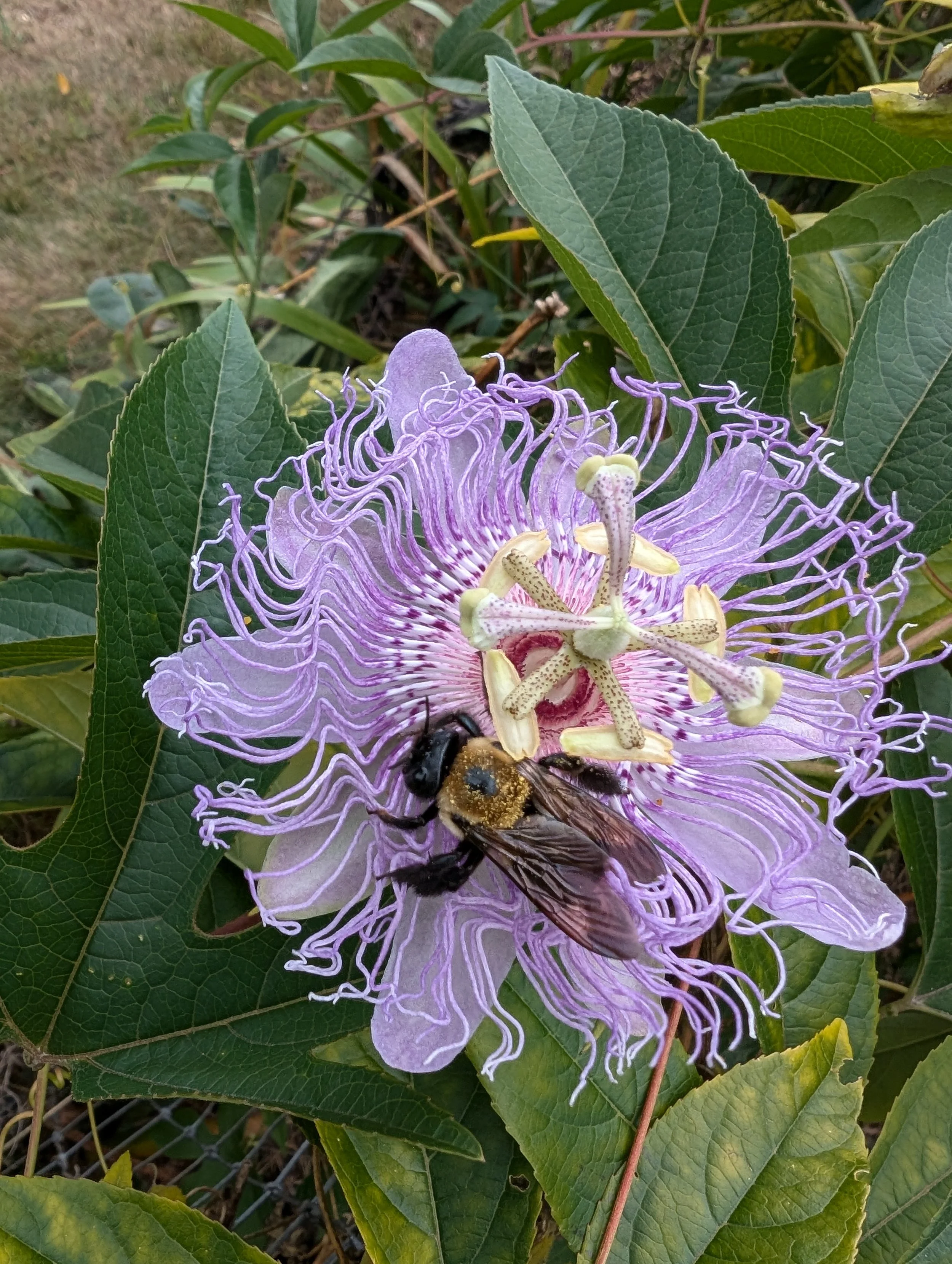
With its intricate flowers and winding tendrils, passionflower is a remarkable plant. Traditionally used as a relaxing nervine, it is often turned to during periods of mental restlessness and difficulty settling into sleep.
When something matters deeply to us, the mind can become caught in a cycle of replaying conversations, questioning decisions, and imagining all the possible outcomes. We often exhaust ourselves searching for answers that may not yet exist.
Passionflower offers an invitation to surrender our need to understand everything right now. There is a certain freedom in allowing some things to remain unresolved and trusting that clarity will come with time.
Ways to work with passionflower: Prepare an infusion of the dried aerial parts or take it as a tincture. I personally appreciate passionflower during times when I feel the physical effects of anxiety, whether I’m restless, feel tension in my body or have racing thoughts . Its earthy, somewhat bitter flavor can be an acquired taste, so you may enjoy blending it with more aromatic herbs like lemon balm or chamomile.
Giving Ourselves Grace
As we navigate our own seasons of change, perhaps we can spend a little less energy trying to control what is unfolding and put a little more energy into tending to ourselves along the way.
We can make space for grief while still appreciating the beauty in our lives. We can honor what we’ve been through while also remaining open to what might be. And we can continue to care deeply while learning to loosen our attachments.
May we find the strength to let go with love, the patience to allow things to unfold in their own time, and the grace to embrace the beautifully imperfect experience of being human.
Disclaimer: The information shared in this article is for educational purposes only and is not intended as medical advice or to diagnose, treat, cure, or prevent any disease. Herbs can interact with medications and may not be appropriate for everyone. Please consult a qualified healthcare professional before incorporating new herbs into your wellness routine, particularly if you are pregnant, nursing, taking medications, or managing a health condition.